According to data from Fortune Business Insights, the global EV charging station market is projected to reach tens of billions of dollars by 2026 and surpass $213.7 billion by 2034.
The global landscape for High Power DC Fast Chargers (DCFC) is highly regionalized: China holds approximately 33% of the market; regions utilizing the CCS2 standard—including Europe, the Middle East, Southeast Asia, Latin America, and Africa—collectively account for 28%; meanwhile, in North America, the NACS standard is rising rapidly, capturing a 20% share.
However, expanding overseas is no longer merely about exporting equipment. Success in entering a target market hinges on certification credentials and alignment with local standards rather than price. Today, leading EV charger OEM/ODM suppliers recognize that the core benchmarks for global success include:
Full custom EV charging hardware and software integration
Advanced solar-storage-EV charging solutions
Seamless regional certification and local compliance capabilities
5 Key Overseas Markets: Compliance & Environmental Challenges Amidst High Growth Potential
1. European Market: Stringent Compliance Standards & High Uptime Requirements
Landscape & Pain Points: Europe has reached a stage of maturity and stability. The EU’s Alternative Fuels Infrastructure Regulation (AFIR) mandates station total power outputs above 600 kW. Strict uptime standards (typically $\ge 99\%$) are driving the widespread adoption of liquid-cooled ultra-fast EV chargers.
Market Access Barriers: Hardware must feature CCS2 interfaces and be a CE certified EV charger; software and protocols must comply with OCPP 2.0.1 (official OCA certification).

2. Middle East (GCC): Favorable Policies Coexisting with Extreme Climates
Landscape & Pain Points: The GCC region mandates the GCC GB/T 2023 compliant EV charger communication protocol. However, high temperatures and dusty environments demand exceptional heat dissipation, dust protection, and ingress protection (IP) ratings.
Market Preferences: Capital-rich markets favor high-power liquid-cooled ultra-fast EV charging stations and integrated solar-storage-EV charging solutions, prioritizing long-term equipment stability and localized O&M.
3. Southeast Asia: Rapid Growth vs. Fragmented Local Standards
Landscape & Pain Points: Southeast Asia is growing at over 50% annually, creating strong demand for cost-effective, rapidly deployable commercial EV charger wholesale equipment.
Market Access Barriers: Policies are highly fragmented. For example, Thailand requires TISI certified EV charging stations (with NBTC telecom certification for wireless modules), while Malaysia and Indonesia enforce their own local standards.
4. African Market: Weak Power Grids & Solar-Storage Integration
Landscape & Pain Points: Over 600 million people lack stable electricity, making traditional power grids a bottleneck for EV expansion despite abundant solar resources.
Market Preferences: Standalone charging piles are ineffective; the market demands EV charging solutions for weak grid areas—specifically integrated “Solar + Storage + EV Charging” systems to bridge power supply deficits.
5. Latin American Market: Electrification Boom & Infrastructure Lag
Landscape & Pain Points: EV adoption is surging rapidly (e.g., Brazil’s pure EV registrations surged by 196.29% in 1st-half 2026), but public infrastructure lags severely behind.
Market Preferences: There is an urgent need to deploy commercial high-power DC fast chargers along key highways, urban arteries, and logistics corridors.
CHARGING-CUBE: Leading EV Charger OEM/ODM Factory Empowering Global Clients
As the market transitions from merely “selling hardware” to “delivering comprehensive energy solutions,” CHARGING-CUBE OEM/ODM Factory leverages its robust manufacturing foundation, full-stack in-house R&D, and global compliance expertise to deliver one-stop B2B EV charger manufacturing services:
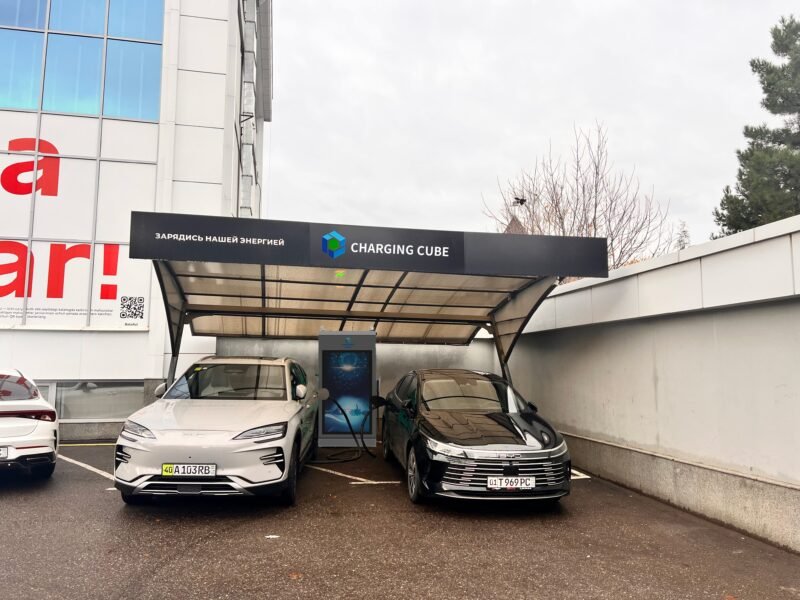
1. Integrated Hardware & Software Solutions (OEM/ODM)
Liquid-Cooled Ultra-Fast Chargers: Supporting mainstream 800V high-voltage EV charging station platforms, providing mature liquid-cooled hardware and system integration for high-power upgrades in Europe, North America, and the Middle East.
Solar-Storage-EV Charging Solutions: Offering systematic “Solar + Storage + EV Charger” export solutions for weak grid regions (such as Africa) or industrial parks, boosting total energy efficiency by over 40%.
Remote Maintenance EV Charger Management System: Proprietary smart cloud/edge platform enabling remote diagnosis and resolution for 85% of common faults, significantly reducing on-site maintenance and travel costs for overseas operators.
2. Deep Localization, Scenario Adaptation & Certification Support
Global Compliance & Certification: Expert in major regional standards (CE, CCS2, OCPP 2.0.1, TISI, NBTC, GCC, etc.), helping global brand owners and CPOs secure market access smoothly while avoiding compliant EV charging infrastructure export pitfalls.
Custom Engineering for Extreme Environments: Customized protective designs (high IP ratings, specialized cooling structures) tailored to harsh conditions like Middle Eastern heat and dust or Southeast Asian humidity.
3. Rapid Technical Iteration & In-House Customization
Independent Full-Stack R&D: Comprehensive control over board design, communication protocol stacks, and liquid-cooling algorithms—eliminating reliance on third-party supply chain schedules.
Custom EV Charging Station Capabilities: Rapid customization for local languages, UI/UX, payment gateway integrations, and local protocols, enabling global clients to swiftly capture market share.