With the increasing prevalence of new energy vehicle fleets, selecting the right charging stations has become a core operational challenge.
Fleet operations prioritize cost control, efficiency matching, and battery longevity, requiring a scientific combination of fast and slow charging methods tailored to specific scenarios.
This article compares the differences between the two from key dimensions to provide a reference for selection:
I. Core Differences: Significantly Different Technical Principles
The fundamental difference between fast and slow charging lies in the energy conversion process and efficiency, which is also the core factor determining their suitability for fleet scenarios.This has a particularly profound impact on the adaptability to large-scale fleet operations.
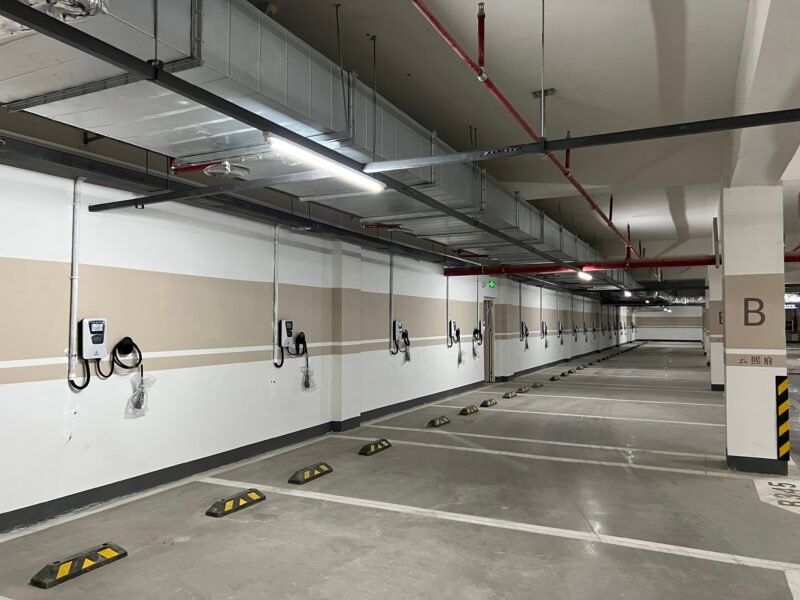
AC charging relies on the vehicle’s onboard charger (OBC) to convert AC power to DC power before replenishing the battery. With a power output of 7-22kW, the equipment is simple, small in size, has minimal impact on the power grid, and is easy to install.
DC Fast charging by passes the onboard charger, directly charging with high-power DC electricity (120kW and above). This results in larger equipment size, requires cooling systems, and places high demands on the power grid load.
II. The “core consideration” for the team’s long-term profitability
In terms of initial investment, the cost per fast charging station plus installation is significantly higher than that of AC charging stations, and grid expansion may be necessary. AC charging stations have lower costs and require no complex infrastructure.
In terms of operation and maintenance, fast charging is more expensive, and maintenance frequency and costs are 3-5 times hig
her than AC charging. AC charging can utilize off-peak electricity, and maintenance is simpler and cheaper.
III. DC Fast Charging is Better Fit for Fleet Turnover Needs
The core advantage of fast charging is its rapid charging speed, which significantly reduces vehicle idle time. It is ideal for high-frequency, high-turnover fleets, such as port transport fleets, urban delivery fleets, and ride-hailing fleets.
(For example, a 120kW DC fast charging station can charge a new energy heavy truck or logistics vehicle for 2-3 hours, typically charging the battery to 80% in 30 minutes to 2 hours.)
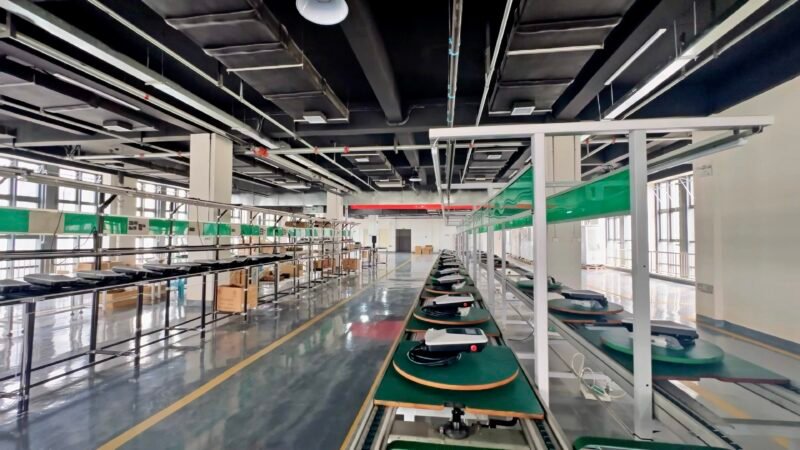
For large-scale fleets, choose us – a professional ODM/OEM charging pile factory
customization on demand and precise adaptation
CHARGING-CUBE EV charger ODM/OEM factories can tailor services to the specific needs of fleets, providing a one-stop service covering the entire process from product customization, solution design, equipment production to installation, commissioning, and after-sales maintenance, achieving “customization on demand and precise adaptation.”
standardized installation processes, enabling rapid response to fleets’ bulk purchasing and installation needs. Compared to traditional procurement models, this significantly shortens the cycle of equipment production, logistics, and installation/commissioning.